


WORKSHOPS
WORKSHOP by

Bridging Innovation to the Clinic: Smart First-in-Human Dose Selection for Novel Targeted Therapeutics
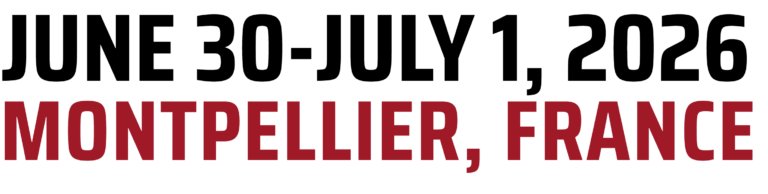
June 30th 2026 at 13h00 in BARTHEZ ROOM
Selecting an appropriate first-in-human (FIH) dose is a pivotal step in successfully translating innovative therapeutic modalities such as antibody-drug conjugates (ADCs), bispecific antibodies, fusion proteins, gene therapies, antisense oligonucleotides (ASOs) and combination treatments into clinical development.
Traditional dose selection approaches often fall short in addressing the unique pharmacokinetic (PK) and pharmacodynamic (PD) characteristics of these modalities, increasing the risk of suboptimal efficacy or safety concerns.
The primary focus of this workshop will be on integrated PK/PD modeling–driven approaches combining in-vitro and in-vivo data, mechanistic insights, and translational strategies to optimize first-in-human dose selection, de-risk early clinical trials, and support regulatory interactions. We will illustrate how these methods extend beyond defining a safe starting dose by enabling prediction of clinically effective doses, onset of action, and duration of treatment effects. Ultimately, this approach supports the design of FIH studies that go beyond safety assessment, enabling efficient dose escalation with a well-justified dose range and study duration, and facilitating a seamless transition to dose-finding studies or even directly into Phase III.
Designed for scientists and decision-makers in preclinical and translational research, this session will offer a clear, strategic framework for using PK/PD modeling to inform FIH study design. Whether you are working on preclinical development, translational strategy, or regulatory interactions, you will leave with actionable insights to enhance decision-making in early-phase drug development.
This workshop will provide a practical overview of FIH dose selection challenges and solutions, drawing from real-world examples and the latest modeling strategies. We will demonstrate how PK/PD modeling can integrate preclinical data, mechanistic insights, and translational approaches to optimize dose selection, de-risk early clinical trials, and support regulatory interactions. Beyond identifying a safe starting dose, PK/PD modeling can also predict clinically efficacious doses, time to onset of effect, and effect duration. In this way, FIH studies will not only be safe but feature an efficient dose escalation with an informed top dose and the right study duration, facilitating a seamless transition to dose-finding studies or even directly to Phase III.
Designed for scientists and decision-makers in preclinical and translational research, this session will offer a clear, strategic framework for using PK/PD modeling to inform FIH study design. Whether you are working on preclinical development, translational strategy, or regulatory interactions, you will leave with actionable insights to enhance decision-making in early-phase drug development.
Hosted by

Bastien Casini
Quantitative Systems Pharmacology Modeler
LYO-X, Switzerland

Igor Vostiar
Senior Clinical Pharmacology and PK/PD Expert
LYO-X, Switzerland
WORKSHOP by

From Science to Strategy – Making Biotech Ventures Investment-Ready
June 30th 2026 at 13h00 in PASTEUR ROOM
The French biotech ecosystem is rich in innovation, but for many startups, the preclinical phase is where ambition collides with investor caution. This panel brings together a venture capitalist, early drug development experts in Biologics and Bioconjugates and a Biotech peer to unpack what makes a startup both fundable and feasible from target validation to IND. Gain practical insights into investor expectations, outsourcing strategies, and integrated development approaches that help de-risk your science and build confidence among the strategic partners critical to your next milestones.

Yvette Stallwood
Senior Director, Head of Early Development Services
LONZA, Switzerland

Antoine Thomas
Senior CMC Consultant
ATBio Consulting, France

Laurence Bonnafoux
Director Bioconjugates MSAT
LONZA, Switzerland
Moderated by

Gavin Vuddamalay
Head of Scientific Affairs and Business Intelligence
MabDesign, France
WORKSHOP by
Leveraging State-of-The-Art In Silico Modeling and Informatics: An End-To-End Biologics Design Worflow From Bioluminate To LiveDesign
July 1st 2026 at 13h00 in BARTHEZ ROOM
The design and optimization of modern biologics increasingly relies on seamless integration of structural modeling, predictive algorithms, and collaborative informatics platforms. This workshop will demonstrate an end-to-end workflow that brings together the capabilities of the Schrödinger core suite, BioLuminate, and LiveDesign to accelerate biologics discovery and engineering.
We begin in BioLuminate, showcasing a range of modeling capabilities used in early antibody assessment and engineering. Participants will explore antibody liability and developability analysis, structure-guided ideation, and a series of engineering strategies powered by state-of-the-art free energy methods — including protein FEP+, residue-scanning FEP, and pH-dependent calculations. These approaches will be demonstrated in the context of practical design questions such as affinity tuning, specificity engineering, and mitigation of liabilities.
The resulting in silico predictions will then be transferred into LiveDesign, where they can be combined with experimental data to support iterative design cycles. Within LiveDesign, attendees will learn how to analyze multi-modal data, generate hypotheses, perform virtual variant exploration, and prioritize next-step engineering ideas using LiveDesign’s collaborative and decision-support environment.
Hosted by :